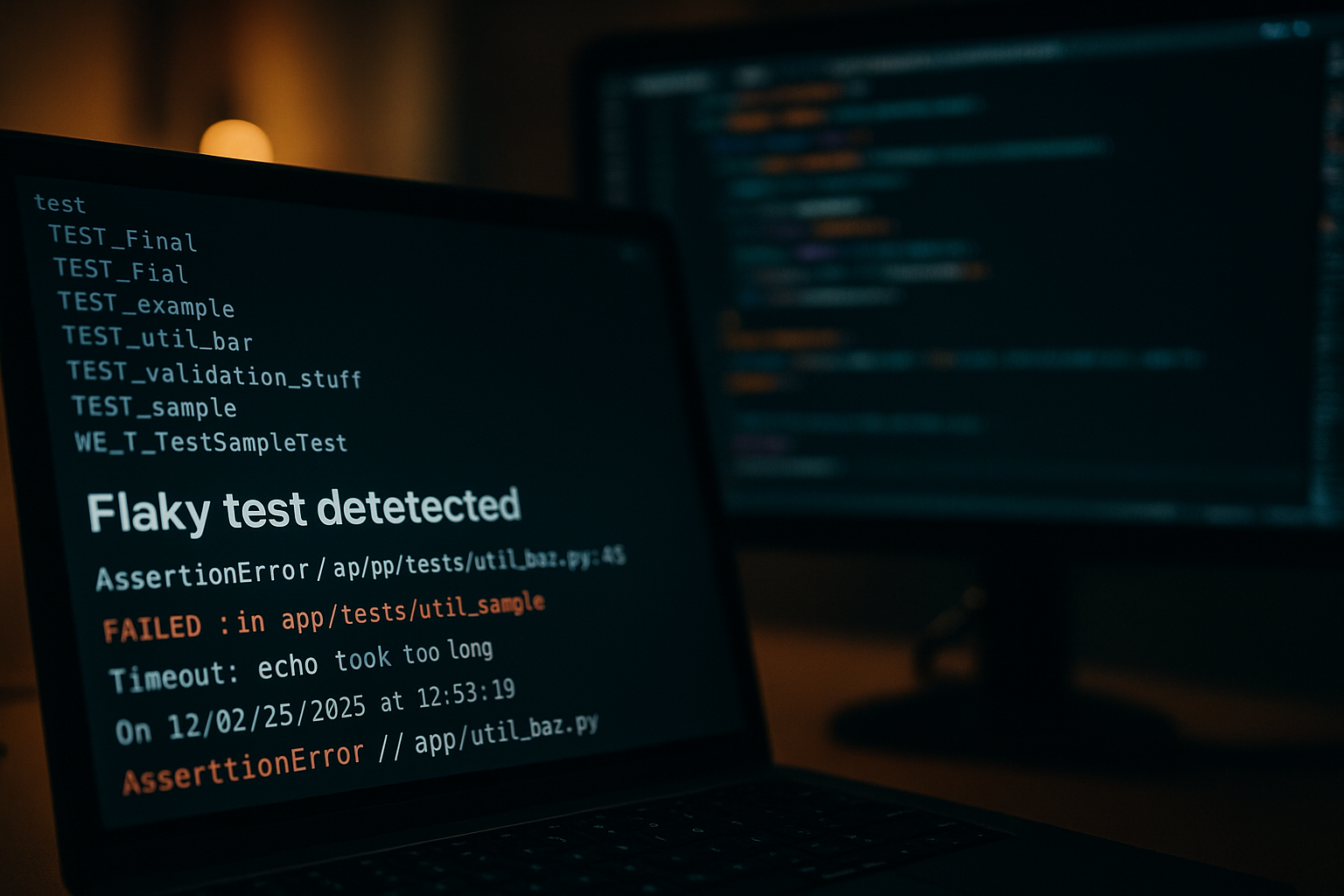
The cost of software failures is a huge burden to the worldwide economy. Consequently, software testing contributes to a large proportion of software development effort and cost. Flaky tests are a particular strain on software testing because they intermittently pass and fail without changes to tests or project code with often non-obvious causes. When flaky tests proliferate, developers may loose faith in their test suites, potentially exposing end-users to the consequences of software failures. Flaky tests are a common occurrence in industry, even for large companies with considerable resources to tackle them. Test FLARE is an EPSRC-funded project that will develop and empirically evaluate techniques capable of automatically reproducing flaky behaviour. It will also provide developers with automated, human-readable explanations that help them further understand the reasons for the flaky behaviour.
Objectives
-
Develop automated techniques for synthetically reproducing environmental conditions. We will formulate a search-based approach to identify the conditions in the execution environment (e.g. CPU speed, disk speed, etc.) that triggers flaky behaviour in a given test. We will do this by developing techniques that make automatic, non-functional changes to test/production code that accurately and efficiently mimic environmental effects during its execution.
-
Develop automated search-based techniques for reliably reproducing different pass/fail flaky test outcomes. We will define the search space of environmental conditions to explore. One important challenge will be the development of a fitness function that is capable of providing good guidance since not all instances of test flakiness are feasible to control.
-
Develop automated techniques for explaining the sources of flakiness in code to developers. We will develop techniques to provide human-understandable explanations for different types of flaky behaviour to developers so that they have the information needed to repair/remove flakiness from test suites, and prevent its recurrence in future.